




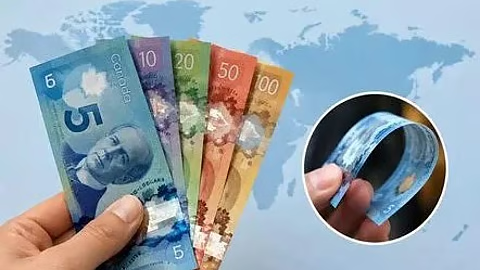
For decades, Indian currency notes have been a part of everyday life. From folded ₹10 notes tucked inside wallets to worn-out ₹20 bills passed through countless hands, paper currency remains deeply embedded in India’s economy despite the explosive growth of digital payments. But now, a major shift could be on the horizon, and it revolves around RBI’s Polymer Notes.
The Reserve Bank of India (RBI) is reportedly reviving its long-discussed plan to introduce polymer banknotes, commonly referred to as “plastic money.” Through RBI’s Polymer Notes initiative, India could soon join a growing list of countries that have already transitioned from traditional paper currency to more durable, secure, and cost-effective polymer-based notes.
The move comes at a time when the cost of printing currency is rising rapidly, billions of damaged notes are being removed from circulation every year, and the demand for physical cash remains surprisingly strong despite the widespread adoption of UPI and digital payments. According to recent reports, the central bank is considering launching a pilot project involving ₹10 and ₹20 denominations under RBI’s Polymer Notes program in select regions across the country.
The renewed focus on RBI’s Polymer Notes is not merely about replacing paper with plastic. It represents a broader effort to improve currency durability, reduce replacement costs, strengthen anti-counterfeiting measures, and modernize India’s cash ecosystem. While digital payments continue to grow, cash remains a vital part of daily transactions for millions of Indians, making the future of physical currency an important national discussion.
But what exactly are polymer banknotes? Why is the RBI considering them now? What happened to India’s earlier attempts at introducing plastic currency? And could RBI’s Polymer Notes eventually transform the future of cash in India?
The answer is more complex—and far more fascinating—than most people realize.
What Are Polymer Banknotes?
Despite being popularly called “plastic money,” polymer banknotes are not rigid like debit cards or credit cards. Instead, they are made from a thin and flexible plastic substrate known as polymer, which allows them to function much like traditional currency while offering significantly greater durability.
Polymer notes can be folded, bent, rolled, and handled in everyday transactions without losing their structural integrity. They are designed to withstand moisture, dirt, heat, and heavy circulation far better than conventional cotton-paper currency.
The technology was first developed in Australia during the 1980s as a solution to counterfeiting and rapid note deterioration. Since then, polymer currency has become one of the most important innovations in modern banking.
Unlike standard paper notes, polymer banknotes often include advanced security features such as transparent windows, holographic elements, micro-optic designs, and specialized inks that are extremely difficult to replicate. These features make them more secure and significantly harder for counterfeiters to copy.
Why Is RBI Considering Polymer Notes Again?
The RBI’s renewed interest in polymer banknotes is being driven by a simple reality: cash is still king in many parts of India.
Even after years of digital payment growth, India’s currency circulation continues to increase. Reports indicate that currency in circulation recently reached a record ₹42.86 lakh crore, reflecting continued demand for physical cash across the country.
At the same time, the cost of managing paper currency is becoming increasingly expensive. According to RBI figures, the expenditure on printing currency notes rose to ₹6,372.8 crore during FY25, compared to ₹5,101.4 crore in the previous financial year. The increase was largely driven by higher demand for banknotes and replacement requirements.
Another major concern is the enormous volume of damaged and soiled notes being withdrawn from circulation every year. During FY25 alone, approximately 23.8 billion pieces of soiled banknotes were disposed of, highlighting the scale of the problem.
For the RBI, polymer notes offer a possible long-term solution. Because they last significantly longer than paper notes, the central bank could potentially reduce replacement costs while improving the overall quality of currency in circulation.
India Actually Tried This Before
Many people assume the polymer note discussion is a completely new idea. In reality, India explored this possibility more than a decade ago.
Back in 2012, the government approved a field trial involving one billion ₹10 polymer notes. The pilot was planned across several cities representing different climatic conditions, including Bhubaneswar, Jaipur, Kochi, Mysore, and Shimla.
The goal was straightforward: increase the lifespan of lower-denomination notes that typically wear out quickly due to frequent usage.
However, the project never progressed beyond the testing stage.
At the time, several technological and operational challenges emerged. Many ATMs and cash-processing machines struggled to identify and handle polymer notes properly. There were also concerns regarding processing infrastructure and large-scale implementation. As a result, the initiative was eventually shelved.
Today, however, the situation appears very different.
Advancements in ATM technology, currency sorting systems, and cash-handling infrastructure have reportedly addressed many of the earlier limitations. Sources suggest that modern ATMs can now be adapted to dispense polymer notes effectively, making the transition more feasible than it was a decade ago.
Why Lower-Denomination Notes Are Being Targeted First
Reports suggest that the RBI’s pilot project will likely begin with ₹10 and ₹20 notes.
At first glance, this might seem surprising. Many would assume that higher-value denominations would be the first candidates for enhanced security features. However, the logic is largely practical rather than security-driven.
Lower-denomination notes change hands far more frequently than larger notes. They are commonly used in local markets, transportation systems, small businesses, street vendors, and daily cash transactions. As a result, they deteriorate much faster.
A ₹10 note may pass through hundreds of hands within a short period, exposing it to dirt, moisture, folding, tearing, and physical damage. Polymer notes could dramatically extend the lifespan of these frequently circulated denominations, reducing the need for constant replacement.
In other words, the pilot is less about introducing flashy new currency and more about solving a practical economic problem.
The Global Shift Toward Plastic Currency
India would not be entering uncharted territory.
More than 60 countries have already introduced polymer banknotes either partially or fully. Australia became the first nation to launch polymer currency in 1988, setting a precedent that many others would eventually follow.
Countries such as Canada, the United Kingdom, New Zealand, Singapore, Malaysia, Romania, Vietnam, Thailand, and Indonesia have all adopted polymer notes over the years. Many of these countries cite longer lifespan, reduced replacement costs, and stronger anti-counterfeiting measures as key reasons behind the transition.
Canada’s experience is particularly noteworthy. Since introducing polymer notes in 2011, the country has reported substantial improvements in note durability and security. Similarly, Australia continues to be regarded as one of the most successful examples of polymer currency implementation globally.
These international success stories provide valuable lessons for India as it evaluates the future of its own currency system.
Are Polymer Notes Really Better Than Paper Notes?
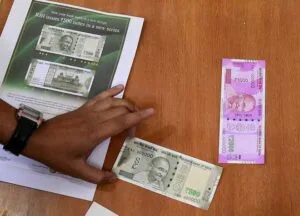
The debate between paper and polymer currency goes far beyond durability.
One of the biggest advantages of polymer notes is their resistance to environmental damage. Unlike paper currency, polymer notes absorb less moisture and are significantly less vulnerable to tearing. This makes them particularly useful in a country like India, where currency often encounters diverse climatic conditions ranging from coastal humidity to extreme summer heat.
Polymer notes also tend to remain cleaner. Since they absorb less dirt and moisture, they maintain their appearance for longer periods.
Security is another major factor. Advanced features such as transparent windows, holographic elements, and embedded security designs make polymer notes considerably harder to counterfeit. Central banks around the world often cite improved anti-counterfeiting capabilities as a major reason for adopting polymer technology.
There are environmental arguments as well.
Although polymer notes are made using plastic-based materials, they generally last multiple times longer than paper notes. This reduces the overall frequency of printing and replacement, potentially lowering resource consumption over the long term.
What About Digital Payments and UPI?
One question naturally arises: why invest in better physical currency when India is rapidly becoming a digital payments powerhouse?
The answer lies in scale.
India’s digital payment ecosystem has transformed the way millions transact. UPI has become one of the most successful payment systems in the world, processing billions of transactions every month.
Yet cash remains deeply important.
Large sections of the population continue to rely on physical currency for daily transactions. Rural economies, informal markets, small vendors, transportation systems, and countless local businesses still operate heavily with cash.
Recent data showing continued growth in currency circulation suggests that digital payments have not eliminated the need for physical money. Instead, both systems are growing simultaneously.
For the RBI, polymer notes are not a rejection of digital payments. They are an attempt to make physical cash more efficient in a future where both digital and cash-based transactions coexist.
Could India Completely Replace Paper Currency?
At least for now, a full replacement appears unlikely.
The RBI is expected to begin cautiously with a limited pilot program and evaluate its effectiveness before considering any wider rollout. Public acceptance, infrastructure readiness, ATM compatibility, production economics, and operational feasibility will all play major roles in determining the next steps.
Even countries that successfully adopted polymer notes often implemented the transition gradually over several years.
India’s enormous population, vast geographic diversity, and complex cash ecosystem make any nationwide currency transformation a massive undertaking.
However, if the pilot proves successful, it could mark the beginning of a long-term shift toward more durable and technologically advanced banknotes.
The Future of Indian Currency
The conversation around polymer notes is ultimately about much more than plastic money.
It reflects a broader effort to modernize India’s financial infrastructure while addressing real-world challenges such as rising printing costs, damaged currency, counterfeiting risks, and operational inefficiencies.
The future of payments may increasingly be digital, but physical cash is unlikely to disappear anytime soon. As long as millions of Indians continue to rely on currency notes for everyday transactions, the quality and durability of those notes will remain an important issue.
The RBI’s proposed polymer note pilot could become one of the most significant changes to Indian currency since the introduction of the Mahatma Gandhi New Series notes.
Whether the experiment succeeds or not, one thing is clear: India’s money may soon look the same, feel slightly different, and last much longer.
What do you think about plastic money in India? Would you trust polymer notes over traditional paper currency? Share your thoughts and follow DesiBooze for more fascinating stories behind the headlines.
Also see-