



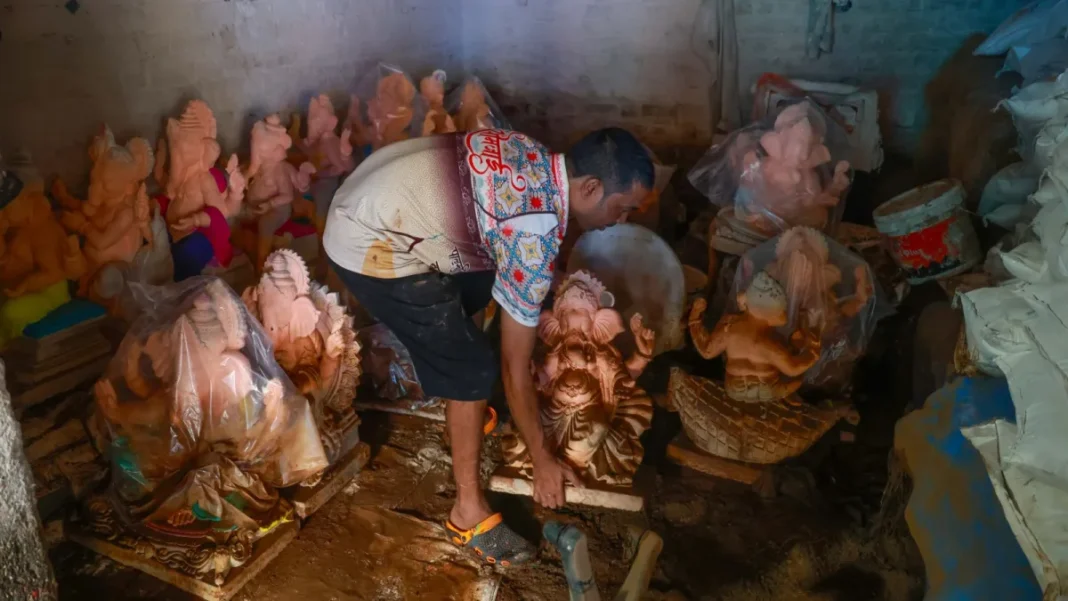
The heartbeat of India’s grand seasonal celebrations has long belonged to the quiet, dusty lanes of small manufacturing towns that build the very visual centerpieces of public worship. Among these, the legendary Pen taluka in Maharashtra’s Raigad district stands as an unrivaled cultural powerhouse, serving as the primary production engine for the millions of handcrafted Ganesh idols that decorate households and massive public marquees nationwide. For generations, these skilled local sculptors have spent up to eight consecutive months molding raw clay and plaster, working around the clock to outpace the unpredictable monsoon flooding seasons and meet the immense logistical demands of the upcoming festive calendar.
Yet, the delicate, time-honored intersection of cultural heritage and micro-enterprise was completely shattered within a matter of minutes as an unprecedented structural catastrophe reshaped the landscape. In an incredibly rapid display of environmental fury, sudden and severe monsoon flooding completely breached the boundaries of these ancient creative settlements, drowning months of meticulous craftsmanship in a sea of thick, destructive mud and water.
The sheer velocity of the disaster completely caught the local manufacturing community off guard, leaving absolutely zero window for preventative evacuation or the structural relocation of inventory. On what initially appeared to be a standard morning of heavy seasonal downpours, a massive, unyielding surge of overflow from nearby creaking estuaries and rural creeks rushed directly into low-lying artisan colonies like Johe and Tambadshet. In less than thirty minutes, the dry, dust-covered floors of highly dense creative workshops were transformed into raging rivers, with current levels rapidly rising between five and six feet deep. Experienced artisans who had spent their entire lives reading the local weather patterns watched in absolute horror from nearby high ground as their life’s work was instantly swallowed by the rising current. The unexpected flash inundation left no time to deploy protective tarpaulins or hoist the fragile, heavy statues onto overhead rafters, rendering the community completely helpless against the incoming wave of destruction.
The Decimating Chemistry of Clay and Slush
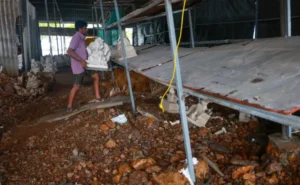
The physical damage left behind by the receding waters presents a deeply heartbreaking visual and structural crisis that cannot be easily fixed with standard post-disaster cleanup efforts. While industrial manufacturing setups can often hose down submerged metallic machinery or dry out waterlogged brick structures, the unique medium of traditional Indian sculpting offers absolutely no room for salvage. The absolute worst of the damage was borne by the highly celebrated, eco-friendly clay variants, which the government and environmental groups have been actively pushing as the future of sustainable worship. When raw, unbaked Shadu clay comes into direct structural contact with moving water, the chemical bond instantly dissolves, causing the beautifully detailed features of the sacred figures to literally melt back into formless mounds of mud. Thousands of highly intricate, semi-finished structures that were actively undergoing their final stages of detailed hand-painting and structural polishing are now buried under layers of toxic, thick regional river slush, permanently ruined beyond any hope of artistic restoration.
The immediate financial calculation of this localized environmental event is staggering, introducing a dark wave of economic ruin that threatens to permanently alter the socio-economic fabric of the region. Initial industry group assessments indicate that the overall losses across the Pen manufacturing belt have easily climbed into tens of crores of rupees, with individual family-owned workshops reporting direct losses ranging between ten and twenty lakh rupees each. These figures represent an absolute wipeout of capital, as the months leading directly up to the main festival cycle account for nearly one hundred percent of the total annual revenue generated by these rural families. Because the vast majority of these micro-enterprises operate on incredibly thin margins, they heavily fund their initial raw material procurement, specialized labor wages, and massive transportation logistics by taking out high-interest seasonal business loans or relying on advance token bookings from city retail buyers. Now, with their physical inventory entirely erased, these creators are trapped in a brutal financial vice, facing the terrifying reality of mounting bank debts while simultaneously bearing the legal and moral obligation to refund advances to disappointed clients.
The Flaws in the Financial Safety Net
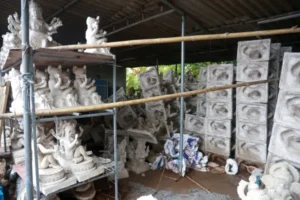
This unprecedented cultural crisis exposes a massive, glaring gap in the structural financial protection systems supposedly designed to safeguard India’s informal creative economy. While traditional agricultural sectors frequently benefit from direct, government-subsidized crop insurance schemes and rapid state relief packages following harsh monsoon cycles, the highly specialized domain of rural craftsmanship exists in a regulatory gray area. The vast majority of standard commercial bank loans extended to these local sculptors feature incredibly rigid, deeply inadequate insurance policies that strictly protect the physical brick-and-mortar building structures while offering zero coverage for the actual creative inventory inside. Furthermore, because these exquisite pieces are handcrafted individually over several weeks rather than stamped out on a mechanized assembly line, standard corporate valuation models completely fail to account for the massive amount of intensive manual labor, specialized artistry, and time invested in each individual piece. Without an immediate, highly customized government financial intervention or direct compensation framework, a massive percentage of these multi-generational creative families will be pushed to the brink of absolute poverty.
Looking ahead, the long-term survival of this globally recognized artistic heritage will require a complete, structural reimagining of how rural creative hubs are built and protected against the changing global climate. As changing global weather patterns continue to cause exceptionally high, hyper-localized cloudbursts and unpredictable regional river swells across the Western Ghats, the traditional practice of building open-air ground-level workshops along natural low-lying water channels is no longer sustainable. Regional planning authorities and local artisan cooperatives must collaborate to design elevated, climate-resilient manufacturing clusters equipped with reinforced upper levels for secure inventory storage during peak monsoon cycles. Additionally, there is an urgent need for national financial institutions to develop specialized, flexible insurance products tailored explicitly for seasonal artisans, ensuring that the actual marketplace valuation of artistic labor is fully protected against sudden environmental anomalies.
The tragic devastation across the workshops of Pen serves as a powerful, unavoidable reminder that the human cost of shifting weather patterns is frequently paid by the most vulnerable keepers of our ancient cultural traditions. It forces a nationwide conversation about whether we are truly doing enough to protect the real human hands that build the very joy, color, and spiritual vibrancy of our greatest national celebrations. Until structural solutions are fully implemented and financial relief reaches the ground, the resilient sculptors of Maharashtra are left facing their most difficult challenge yet—standing amidst the ruins of their flooded heritage, trying to figure out how to rebuild their lives from scratch after monsoon flooding in the remaining few weeks before the rest of the nation begins its celebrations.
Please share this deep dive within your community to help raise awareness for our regional artisans, and subscribe to our newsletter below to receive regular updates on grassroots cultural movements and local economic updates across India.
Rain Destroys Idols Worth Crores in Pen Taluka provides a sobering look at how the flash inundation physically impacted the manufacturing hubs, showing the mud-soaked realities that local artisans are currently navigating on the ground.
Follow us on instagram – @desibooze for daily updates.
Also see-