



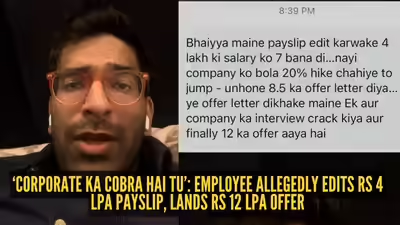
Imagine earning ₹4 lakh a year and suddenly landing a job offer worth ₹12 lakh. Not because you learned a new skill, built a successful startup, or cracked an impossible interview, but because of a salary slip.
The Edited Payslip Salary Hike controversy is exactly why the internet can’t stop talking. According to a viral story circulating across LinkedIn, Instagram, Reddit, and workplace WhatsApp groups, an employee allegedly edited his ₹4 LPA payslip before switching jobs and eventually secured a ₹12 LPA offer. While the complete authenticity of the story remains unclear, the reaction it generated is very real.
Within hours, social media was divided. Some people called it fraud. Others called it a masterclass in salary negotiation. Memes flooded timelines, HR professionals jumped into the debate, and thousands of employees saw something in the story that felt surprisingly familiar.
But why did this story resonate so strongly?
The answer lies in a much bigger conversation about salary transparency, workplace fairness, and how companies decide what a person is worth.
Why This Story Went Viral
Most workplace stories disappear within a day. This one didn’t.
The reason is simple: it touched a nerve.
Millions of professionals have experienced the frustration of feeling underpaid despite working hard, gaining new skills, and taking on more responsibilities. Many employees believe that salary growth is often influenced less by talent and more by where they started their careers.
The viral story became symbolic of that frustration. For many people, it wasn’t just about one employee allegedly editing a document. It was about challenging a system they believe often undervalues talent.
As a result, people weren’t just reading the story. They were debating it.
The Salary Slip Question That Employees Hate

If you’ve ever switched jobs, you’ve probably heard this question:
“What’s your current CTC?”
For recruiters, it’s a standard part of the hiring process. For employees, however, it can feel like a barrier.
Many professionals argue that once a company knows your current salary, the negotiation often revolves around giving you a percentage increase rather than evaluating your actual market value.
This creates a problem.
If you’re underpaid today, your future salary may continue to be influenced by that lower benchmark, regardless of how much your skills have improved.
That’s why so many people connected with the ₹4 LPA to ₹12 LPA story. It highlighted a concern that already existed in the minds of countless professionals.
Why Companies Ask For Salary Slips
To understand both sides of the debate, it’s important to look at why employers ask for salary slips in the first place.
From a company’s perspective, salary documents help verify information provided by candidates. Recruiters use them to confirm employment details, understand compensation expectations, and maintain consistency within salary structures.
Many organizations also argue that salary verification helps prevent candidates from inflating their compensation history.
On paper, these reasons make sense.
However, critics believe that relying too heavily on salary history creates a system where compensation is based more on the past than on future potential.
The Real Problem: Salary History vs Skill Value
Imagine two candidates applying for the same role.
Both have five years of experience.
Both possess similar technical skills.
Both perform equally well during interviews.
Yet one candidate currently earns ₹5 lakh annually while the other earns ₹12 lakh.
Should their future salaries be different?
Many employees argue that they shouldn’t be.
Critics of salary-history-based hiring believe compensation should reflect skills, performance, responsibilities, and market demand—not simply what another company was willing to pay.
This is where the viral story becomes more than just a workplace controversy. It raises questions about whether the hiring process itself needs to evolve.
The Ethical Side Of The Debate

While many people sympathized with the frustration behind the story, sympathy is not the same as approval.
Altering official documents raises serious ethical concerns.
Trust plays a central role in every professional relationship. Employers expect candidates to provide accurate information, while candidates expect employers to evaluate them fairly.
When either side breaks that trust, the relationship starts on unstable ground.
Most companies conduct background verification before onboarding employees. If inconsistencies are discovered, job offers can be withdrawn, employment can be terminated, and reputational damage can follow.
This is why many HR professionals strongly opposed the viral narrative, even if they agreed that salary transparency remains a problem.
Why The Internet Couldn’t Stop Arguing
The internet loves stories where ordinary individuals appear to challenge larger systems.
Whether it’s a startup disrupting an industry, a customer exposing a corporation, or an employee finding a loophole in workplace practices, people are naturally drawn to these narratives.
The Edited Payslip Salary Hike ₹4 LPA to ₹12 LPA story offered everything social media thrives on:
- Money
- Workplace drama
- Ethical ambiguity
- Corporate criticism
- Relatable frustration
Most importantly, it forced people to pick a side.
Was the employee a genius who outsmarted an unfair system?
Or was it simply fraud disguised as ambition?
That question fueled millions of views, comments, and shares.
What Other Countries Are Doing Differently
Interestingly, this debate is not unique to India.
Several countries have already started rethinking salary-history-based hiring.
In parts of the United States, employers are restricted from asking candidates about previous salaries. Similar conversations are taking place across Europe and other developed economies.
The goal is straightforward: ensure candidates are compensated based on skills and market value rather than historical pay.
Supporters believe this approach helps reduce wage inequality and creates a more merit-based hiring environment.
As discussions around salary transparency continue growing, India may eventually face similar conversations.
What Employers Can Learn From This
Regardless of where people stand on the controversy, the public reaction sends a clear message.
Many employees feel that compensation systems are not always fair or transparent.
Organizations that focus on skill-based hiring, transparent salary bands, and market-driven compensation may find it easier to attract and retain talent in the future.
Employees want to feel that their value is being measured accurately—not simply compared to a number on an old payslip.
The Final Verdict
The viral Edited Payslip Salary Hike ₹4 LPA to ₹12 LPA story isn’t really about one employee.
It’s about a larger conflict between traditional hiring practices and modern workforce expectations.
If you focus solely on the alleged document manipulation, the answer may seem straightforward.
If you focus on the frustration that made millions of people relate to the story, the debate becomes far more complicated.
Perhaps that’s why the conversation refuses to die.
Because at its core, this isn’t just a story about a payslip.
It’s a story about value, opportunity, fairness, and the question that continues to divide the internet:
If your skills are worth ₹12 lakh, should your previous salary decide your future?
Follow us on instagram @desibooze to get daily updates.
Also see-