



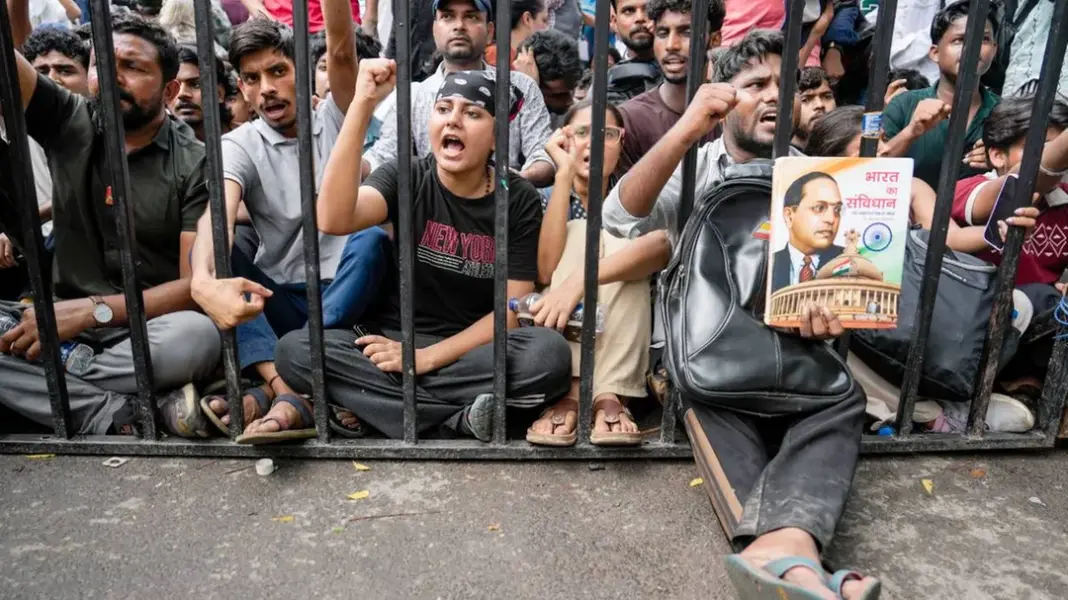
In the scorching heat and muggy humidity of mid-2026, New Delhi’s iconic red-sandstone observatory complex—Jantar Mantar—became the epicenter of a defining democratic moment in modern Indian history. What began as scattered online frustration over systemic flaws in competitive examinations rapidly transformed into a full-scale, youth-led political movement. Tens of thousands of medical aspirants, university students, activists, and concerned citizens converged on the capital’s designated protest ground to demand institutional accountability, legal safeguards, and long-overdue educational reforms.
To understand the magnitude of the 2026 uprising, one must look beyond the immediate headlines. The movement at Jantar Mantar was not an isolated outburst of student anxiety; it was the culmination of years of structural negligence, compromised examination administration, and administrative inertia. By turning a historic astronomical site into a platform for civic dissent, India’s youth asserted their political agency and issued a clear message: the futures of millions of young citizens can no longer be treated as collateral damage in institutional failure.
The Breaking Point: Systemic Failures and the Exam Leak Crisis
At the core of the agitation was a crisis that struck directly at the heart of India’s social mobility ladder. For millions of middle- and lower-income families, high-stakes national competitive tests—most notably the National Eligibility cum Entrance Test (NEET-UG)—represent the single most reliable pathway to professional security and upward mobility. Aspirants spend years in intensive coaching hubs like Kota, Patna, and Hyderabad, putting their lives on hold and incurring significant financial debt to secure a seat in premier institutions.
The fragile trust in this competitive ecosystem shattered when allegations of widespread paper leaks, scoring anomalies, and administrative malpractices surfaced. Subsequent test cancellations, postponed evaluations, and reports of organized paper-leak syndicates sparked nationwide outrage. Tragically, the emotional and psychological toll manifested in reports of student distress and suicides across several states.
For the student community, the issue extended beyond a single compromised test paper. It reflected an administrative culture that appeared slow to acknowledge systemic flaws and reluctant to fix institutional vulnerabilities. The realization that years of relentless effort could be rendered meaningless by organized fraud transformed quiet grief into collective indignation.
Birth of the Movement: The Cockroach Janta Party and Digital Satire
While public anger simmered across online platforms, the movement found its organizational footing through an unconventional catalyst. Birthed originally as a satirical digital response to derogatory public remarks that dismissed youth dissent on social media, the Cockroach Janta Party (CJP)—spearheaded by digital communication strategist Abhijeet Dipke—rapidly transitioned from internet satire into a formidable physical force on the ground.
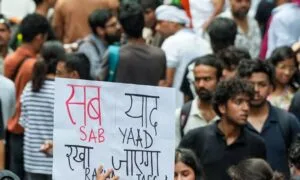
The CJP’s founders chose Jantar Mantar as their central headquarters, establishing a continuous sit-in on June 20, 2026. Unlike traditional political rallies managed by established party machinery, the CJP movement operated on a decentralized, open-access model. Students, independent organizers, and civil society volunteers arrived at Jantar Mantar without formal hierarchies or partisan banners.
The movement focused its demands on two clear objectives: the immediate resignation of Union Education Minister Dharmendra Pradhan to establish high-level political accountability, and the enactment of rigorous legal frameworks to eliminate paper-leak networks permanently. What made the CJP movement distinct was its ability to bridge digital subculture with street-level activism, creating a compelling narrative that resonated with Gen Z across diverse regions and backgrounds.
The Moral Force: Sonam Wangchuk’s Indefinite Fast
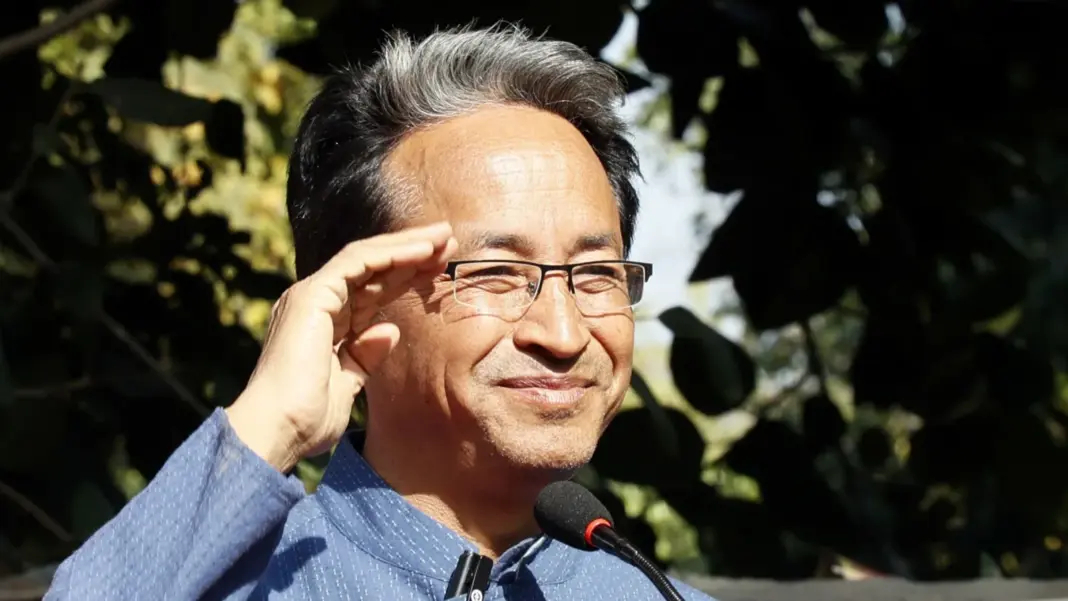
The movement gained significant momentum on June 28, 2026, when renowned educator, engineer, and innovator Sonam Wangchuk joined the demonstrators at Jantar Mantar and announced an indefinite hunger strike in solidarity with the students. Wangchuk, widely respected for his pioneering work in sustainable technology and educational reform in Ladakh, brought profound moral weight to the protest site.
Sitting on a modest wooden platform under the scorching Delhi sun, Wangchuk framed the crisis not as a routine political dispute, but as a moral emergency touching the core of India’s constitutional commitments to its youth. Over the course of three weeks, his presence attracted an ever-growing crowd of supporters, civil society figures, and international observers.
As the hunger strike progressed into its second and third weeks, doctors warned that Wangchuk had lost over nine kilograms and faced severe physiological risks. Despite declining health and warnings of potential organ failure, Wangchuk refused intravenous fluids, maintaining that the struggle for educational integrity was worth every personal sacrifice. His resolve turned Jantar Mantar into a national focal point, compelling public figures, regional leaders, and prominent citizens to visit the site and extend their support.
Mobilization and Escalation: Solidarity Across Society
By mid-July, the sit-in at Jantar Mantar had expanded beyond a student gathering. The movement became a rallying point for diverse segments of Indian society who recognized their own struggles in the students’ fight for fairness.
Farmer organizations, led by figures like Rakesh Tikait, mobilized hundreds of supporters to join the protest site, establishing common ground between agricultural hardships and youth unemployment. Legal professionals from the Supreme Court Bar Association, independent journalists, stand-up comedians, actors, and public intellectuals visited the venue to voice solidarity. Opposition political parties, including senior leaders from the Congress, Aam Aadmi Party, Samajwadi Party, and Trinamool Congress, addressed gatherings at Jantar Mantar, calling for executive accountability and parliamentary debates on examination security.
Even mainstream student organizations, including the Akhil Bharatiya Vidyarthi Parishad (ABVP), held parallel demonstrations demanding high-level review committees and comprehensive institutional reforms, demonstrating that the demand for examination integrity transcended traditional political divides.
July 18 to July 20: Police Action, the Parliament March, and the Stand-Off
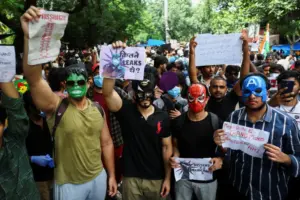
The confrontation between protesters and authorities reached a critical stage in the early hours of July 18, 2026. In a coordinated pre-dawn operation, law enforcement personnel entered the Jantar Mantar protest site, dismantled the central stage, and forcibly transferred Sonam Wangchuk to Safdarjung Hospital on his twenty-first day of hunger strike. Authorities cited deteriorating vital signs and compliance with judicial directives regarding medical care as the primary justification for the intervention.
The sudden removal of Wangchuk and the dismantling of the protest infrastructure drew sharp criticism from student leaders and legal representatives. Rather than quelling the agitation, the police action served as an immediate call to action. Organizers called for a massive “Chalo Sansad” (March to Parliament) on July 20, 2026.
On July 20, tens of thousands of young demonstrators assembled near Jantar Mantar and attempted to march toward Parliament House. Heavy police barricading along Tolstoy Marg and surrounding avenues led to intense stand-offs. As crowds attempted to breach security perimeters, police deployed water cannons, tear gas, and baton charges to disperse the gathering. Dozens of student protesters and law enforcement personnel sustained injuries, while several organizers were detained. The events triggered emergency metro station closures, massive traffic diversions across Central Delhi, and immediate legal petitions in the Supreme Court and Delhi High Court regarding police conduct and constitutional rights to peaceful assembly.
Media Landscapes and the Battle of Narratives
A defining feature of the 2026 Jantar Mantar uprising was the stark contrast between traditional broadcast media coverage and independent digital reporting. During the initial weeks of the sit-in, student organizers repeatedly highlighted the lack of sustained prime-time coverage on major television networks.
In response, the movement built its own media infrastructure. Student creators, independent video journalists, and social media influencers used live-streaming platforms, encrypted messaging groups, and short-form video formats to broadcast real-time updates directly to millions of viewers nationwide. High-definition clips of police interactions, speeches from the protest stage, and medical updates regarding Sonam Wangchuk circulated across platforms, bypassing traditional gatekeepers and maintaining public engagement.
This decentralized communication network enabled regional solidarity rallies to form spontaneously in cities such as Jaipur, Patna, Lucknow, Bengaluru, and Pune. The digital sphere became both a shield against narrative suppression and a vital engine for physical mobilization.
Legislative and Administrative Responses: Fast-Track Courts and Beyond
Facing mounting pressure from the street, public petitioning, and debates in Parliament, the administration responded with legal and administrative measures. Addressing parliamentary groups, Prime Minister Narendra Modi reiterated the government’s commitment to protecting the youth and taking strict action against paper-leak syndicates.
Key measures introduced and reinforced during this period included:
-
Special Fast-Track Courts: The establishment of dedicated judicial tribunals to fast-track cases involving examination leaks, ensuring swift trials and stringent penalties for offender networks.
-
Enhanced Penalties: Strict legal provisions under national public examination laws, including severe monetary fines, asset confiscations, and extended prison sentences for organized cheating networks.
-
Review Committees: Proposals to constitute high-level expert panels comprising academics, technology experts, and former administrators to audit the operational security of national testing agencies and recommend systemic overhauls.
While government officials emphasized that these measures demonstrated decisive action, student groups and civil society representatives argued that legal penalties alone were insufficient without structural transparency, regular administrative audits, and executive accountability.
The Political and Social Aftershocks: A Generation Claims Its Agency
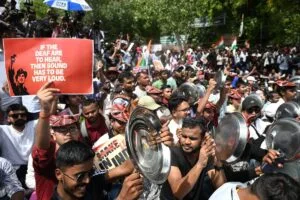
The 2026 Jantar Mantar movement represented a broader sociological transformation within India’s vast demographic landscape. It highlighted that Gen Z and young voters are increasingly willing to organize around concrete governance issues—such as education, employment security, institutional fairness, and administrative transparency—rather than traditional identity-based political narratives.
The movement demonstrated how digital satire can mature into sustained civic engagement, and how non-violent moral resistance retains the power to challenge entrenched political power. Furthermore, the agitation underscored the critical importance of preserving physical spaces like Jantar Mantar where citizens can exercise their constitutional rights to assemble, dissent, and hold leadership accountable.
The Lasting Legacy of the 2026 Protests
The youth uprising at Jantar Mantar in 2026 will be remembered as a landmark moment in India’s democratic journey. It proved that when the legitimate aspirations of millions of young citizens are threatened by systemic negligence, public resistance is not merely inevitable—it is a vital corrective mechanism.
The red sandstone walls of Jantar Mantar have witnessed centuries of change, but the summer of 2026 added a vital chapter to its history. By standing firm against police batons, extreme weather, and administrative pushback, the young men and women who gathered on Jantar Mantar Road sent an unmistakable signal to the nation: India’s youth are no longer passive spectators in the shaping of their destiny, but active custodians of its democratic future.
Follow us on instagram for getting daily updates – @desibooze.
Also see-