




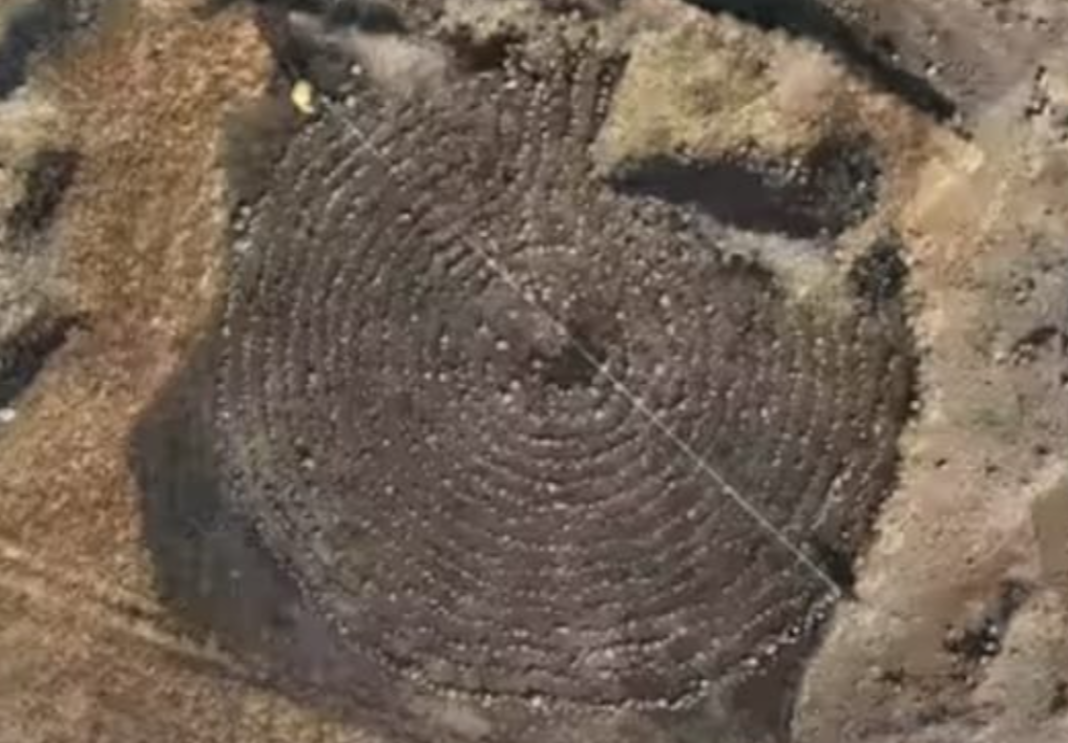
India’s ancient past has revealed yet another jaw-dropping surprise. Archaeologists have recently uncovered India’s largest circular labyrinth stone, believed to be over 2,000 years old, making it one of the most significant stone discoveries in recent times.
The massive stone structure has left experts stunned—not just because of its size, but because of how precisely it was carved nearly two millennia ago.
🗿 What Is This Circular Labyrinth Stone?
The stone features a carefully carved circular maze-like pattern, known as a labyrinth. Unlike puzzles meant to confuse, ancient labyrinths were often symbolic—representing spiritual journeys, rituals, cosmic order, or meditation paths.
What makes this discovery historic is that:
-
It is the largest circular labyrinth stone ever found in India
-
The carvings are geometrically precise
-
It dates back to around 2,000 years ago, based on archaeological analysis
🔍 How Did Archaeologists Discover It?
This wasn’t a случай discovery.
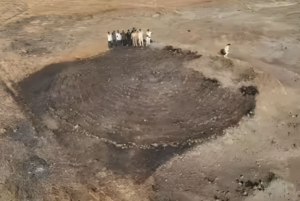
Archaeologists found the labyrinth stone during a systematic archaeological survey conducted in the region. The stone was:
-
Partially buried underground
-
Covered by layers of soil and vegetation
-
Initially mistaken for a natural rock formation
During surface cleaning and mapping, researchers noticed symmetrical circular carvings, which immediately raised red flags (the good kind 👀).
Further excavation revealed the entire labyrinth pattern, confirming it as a man-made structure.
⏳ How Was the “2,000-Year-Old” Age Determined?
Since stone itself cannot be carbon-dated, archaeologists used multiple scientific and contextual methods, including:
-
Stratigraphy: Studying soil layers around the stone
-
Tool-mark analysis: Comparing carving styles with known ancient techniques
-
Nearby artefacts: Pottery fragments and settlement remains found close to the site
-
Regional historical records: Linking the design to early historic-period cultures
All indicators suggest the stone belongs to the early historic period of India, roughly 2,000 years old.
🧠 Why Is This Discovery So Important?
🔹 Rare in India
Large circular labyrinth stones are extremely rare in Indian archaeology, making this a once-in-a-generation find.
🔹 Advanced Ancient Knowledge
The precision suggests deep understanding of:
-
Geometry
-
Symmetry
-
Spatial planning
Clearly, ancient Indians were not experimenting randomly—this was intentional and skilled craftsmanship.
🔹 Ritual or Spiritual Significance
Experts believe the labyrinth may have been used for:
-
Religious or ritual walks
-
Meditation practices
-
Symbolic representation of life cycles
-
Community or ceremonial gatherings
Research is still ongoing.
🌍 Why Is It Going Viral Now?
Because it perfectly fits the DesiBooze formula:
-
Ancient India flex 💪
-
Hidden history uncovered
-
“How did we not know this?” moment
-
Proof that 2,000 years ago, people here were already operating on another level
🧾 Final Word
The discovery of India’s largest 2,000-year-old circular labyrinth stone is a powerful reminder that India’s past is still buried beneath our feet—literally.
And every such find forces us to rethink one thing:
👉 Ancient India was never “primitive”—it was precise, planned, and powerful.
For Daily Updates – Follow us on Instagram – @desibooze
Also see –


