




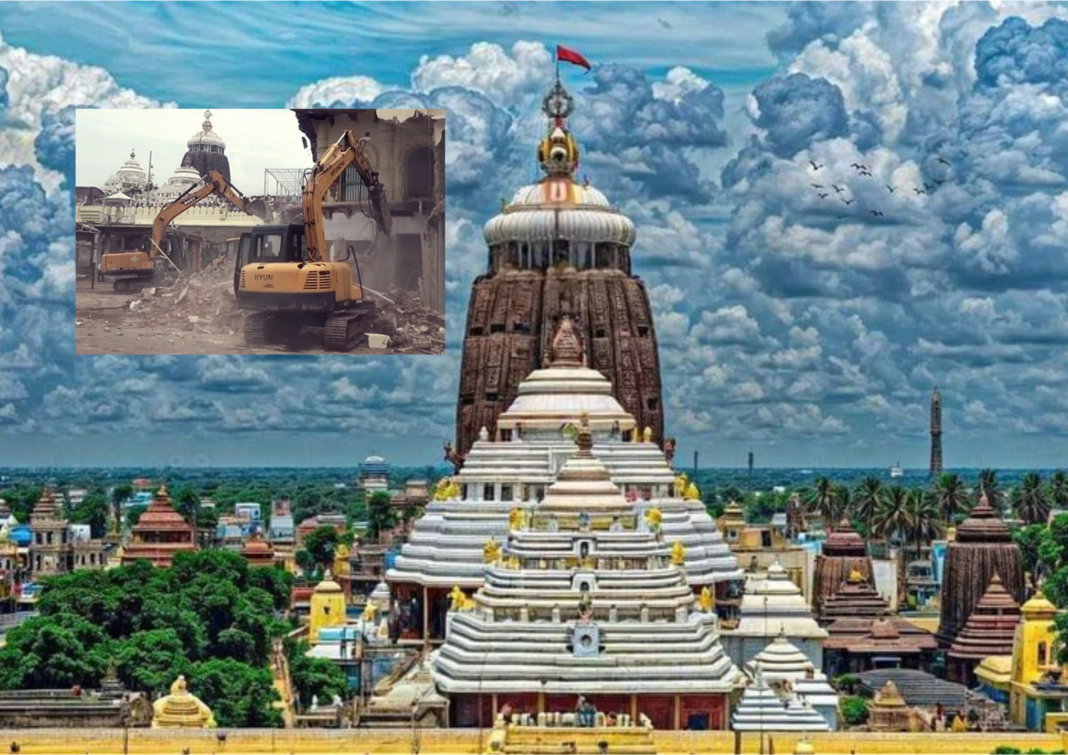
Beneath the sacred soil of Puri — one of India’s holiest pilgrimage cities — lies an entire ancient world. A Ground Penetrating Radar (GPR) survey conducted by a team from IIT Gandhinagar has delivered findings that have stunned historians, archaeologists, and devotees alike: a massive underground Sudanga (tunnel) reportedly running from the iconic Shree Jagannath Temple all the way to the sea, alongside 43 buried heritage structures spread across the city.
What Is the Sudanga? The Tunnel That Has Stunned Odisha
The word Sudanga in Odia refers to an underground tunnel or passage. The GPR survey’s draft report has indicated the likely presence of a long subterranean tunnel beginning at the Shree Jagannath Temple (Srimandir) and extending toward the sea beach. Researchers from IIT Gandhinagar, who conducted the survey, have suggested this passage could also be an ancient drainage or water-channel infrastructure — but its sheer scale and alignment have made historians sit up and take serious notice.
Whether it was a royal escape route, a ritual passage, or an ancient civic engineering marvel, the discovery of this Sudanga is being described as one of the most significant archaeological revelations in Odisha in recent memory.
43 Heritage Structures Found Underground — Full List of Key Locations
In total, the GPR survey identified 43 buried heritage structures of varying sizes at multiple sites across the temple town of Puri. These are not limited to the Jagannath Temple complex — they extend across major areas of Srikhetra, suggesting that an entire ancient settlement may lie buried beneath modern-day Puri.
Key Locations Where Buried Structures Were Found
- Emar Matha (Amar Matha)
- Nrusingha Mandira (Nrusimha Temple)
- Budhi Maa Mandira (Budhi Ma Temple)
- Shree Jagannath Temple (Srimandir) precinct
- Temple road stretches in Puri
- Wider areas of Srikhetra city
In addition to structural remains, the excavation and survey also unearthed artefacts — including earthen pots, metal utensils, and everyday objects — that offer a vivid glimpse into the lives of people who inhabited this sacred city centuries ago.
How Was This Discovered? The Srimandir Parikrama Project Connection

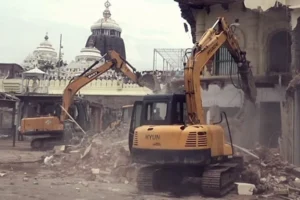
The discovery unfolded as a dramatic by-product of the Srimandir Parikrama Project, an ambitious government initiative aimed at beautifying and developing the area surrounding the Jagannath Temple. When the Odisha Bridge and Construction Corporation (OBCC) began excavating soil around the temple’s Meghanada Pacheri wall, workers made a stunning find — ancient artefacts and a stone lion sculpture from the Ganga dynasty era buried beneath the earth.
This discovery prompted authorities to commission a full-scale GPR survey to map what lay below. The IIT Gandhinagar team was brought in, and the results of their survey — now emerging through a draft report — have rewritten what we know about the subterranean history of Srikhetra.
Timeline of Discoveries
What Is the Ganga Dynasty Connection?
The Eastern Ganga dynasty (also called the Ganga Vansha) was one of the most powerful ruling dynasties of medieval Odisha, reigning from roughly the 5th to the 15th century CE. The famous Jagannath Temple in Puri — as it stands today — was largely constructed during their reign, most notably by King Anantavarman Chodaganga Deva in the 12th century.
The discovery of a Kirtiraj (stone lion sculpture) belonging to the Ganga dynasty period during the Parikrama Project excavation is therefore immensely significant. It suggests that buried beneath Puri’s streets could lie an entire lost urban landscape from the height of Ganga dynasty power — temples, mutts, drainage systems, and potentially royal structures yet to be excavated.
Conclusion: Puri’s Sacred Earth Holds an Ancient World
Puri has always been considered one of the four sacred Dhams of India, a city touched by the divine. These findings suggest that this sacredness has deep material and historical roots — an entire civilisation built and buried here over centuries, waiting patiently to be rediscovered.
The coming months will be crucial. Will the government release the full survey report? Will systematic, scientifically guided excavation begin before modern development erases what lies below? The sacred earth of Srikhetra is speaking. It remains to be seen whether we are ready to listen.
Follow us on instagram @desibooze.
Also see-


