


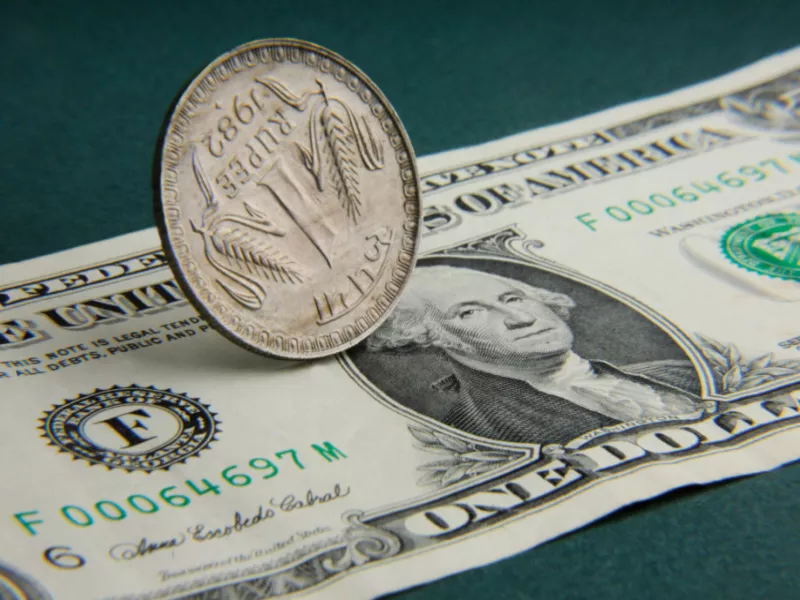
The Indian rupee slipping to an all-time low of ₹94 against the U.S. dollar has triggered serious concern across financial circles and among everyday consumers. Currency movements may sound like a topic only for economists and traders, but the reality is much bigger. When the rupee weakens sharply, the impact eventually reaches fuel prices, imported goods, travel costs, inflation, and business sentiment. That is why the latest fall in the rupee is not just a market update. It is a warning sign for the wider economy.
What has made this moment even more alarming is the speed of the decline. A steep fall in a short period creates panic, raises uncertainty, and sparks questions about how much further the rupee can slide. Naturally, one question is now dominating discussions: if the crisis continues, can the rupee actually head toward the ₹100 mark?
Why the Rupee Is Falling So Fast
A falling rupee usually reflects pressure from multiple sides, and this time the situation is no different. One major factor is the strength of the U.S. dollar. Whenever global uncertainty rises, investors tend to move money into dollar-based assets because they are seen as safer. This boosts the dollar and puts pressure on emerging market currencies like the rupee.
Another reason is crude oil. India imports a large part of its energy needs, and oil is priced globally in dollars. When oil becomes expensive and the dollar remains strong, India needs to spend more foreign currency for the same imports. That increases pressure on the rupee.
Global geopolitical tensions can also make the situation worse. War fears, trade uncertainty, and risk-off investor behaviour often lead to capital outflows from developing markets. When foreign investors pull money out, the domestic currency weakens further.
Why This Matters to Ordinary People
A weak rupee does not stay limited to charts and financial headlines. It directly affects daily life. Imported goods become more expensive, which can raise prices for electronics, gadgets, machinery, medicines, and even certain food items. Foreign travel becomes costlier. Students studying abroad feel the pressure. Businesses that depend on imported raw materials face higher costs, and those costs can eventually be passed on to consumers.
One of the biggest concerns is fuel. Since India imports a significant amount of crude oil, a weaker rupee can make oil imports costlier even if global crude prices do not rise sharply. That creates a ripple effect across transport, logistics, food delivery, and household budgets.
This is why the rupee’s decline matters so much. It is not just about exchange rates. It is about inflation and affordability.
Can the Rupee Really Cross ₹100?
The ₹100 per dollar mark is psychologically huge. Whether the rupee crosses it soon depends on several factors: the direction of the U.S. dollar, global crude prices, RBI intervention, foreign investment flows, and the broader geopolitical environment.
At the moment, crossing ₹100 is not guaranteed, but it is no longer a question people are laughing off. If global tensions continue, oil prices remain elevated, and capital outflows persist, the pressure can intensify. However, the Reserve Bank of India may step in more aggressively to manage volatility and slow down panic-driven movements.
So the ₹100 level is possible, but not inevitable. Much will depend on whether the current crisis eases or deepens.
What the Government and RBI Can Do
The government and RBI have tools to manage currency stress, even if they cannot fully control global forces. The RBI can use forex reserves to support the rupee, intervene in currency markets, and send calming signals to investors. The government can work on reducing inflation risks, improving investor confidence, and strengthening trade and capital flows.
At the same time, structural reforms matter. In the long run, reducing dependence on imported energy, boosting exports, and improving domestic manufacturing can make the rupee more resilient.
Conclusion
The rupee falling to ₹94 against the dollar is more than just a number. It reflects pressure on the Indian economy at a time of global uncertainty and rising financial stress. The fear around a possible move toward ₹100 is driven not just by the exchange rate itself, but by what that would mean for inflation, imports, fuel, and consumer spending.
For now, the biggest takeaway is clear: when the rupee weakens this fast, everyone should pay attention. Because what starts in the forex market rarely stays there for long.
Follow us on instagram @desibooze.
Also see-