

India has taken a major civilisational step by launching a global effort to restore Hindu temples outside its borders, with Indonesia becoming the first country in this mission. The move is being seen as more than just a cultural project. It reflects India’s growing confidence in reviving shared heritage, strengthening historical ties, and expanding its soft power through civilisational diplomacy. The decision has already sparked widespread interest because it connects religion, history, culture, and international relations in one powerful development.
For many, this is not simply about old structures or restoration work. It is about bringing forgotten heritage back into public memory. By beginning with Indonesia, India is also sending a clear message about its intention to rebuild ancient cultural bridges across Asia and beyond.
Why Indonesia Is the First Step
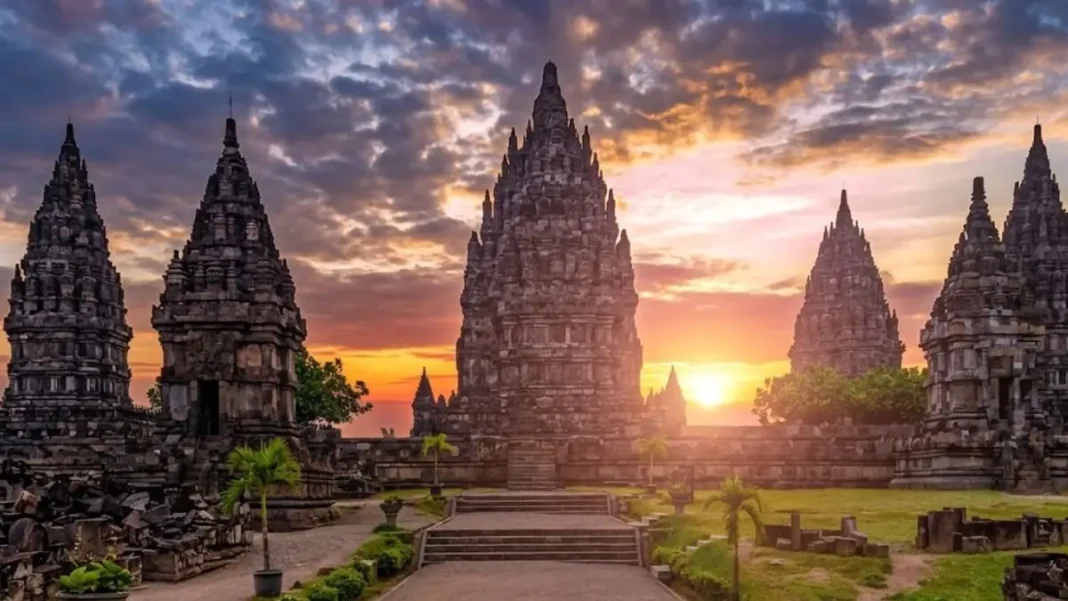
Indonesia is a significant starting point for this initiative because of its deep civilisational links with India. Although Indonesia is now the world’s largest Muslim-majority nation, it has a long and visible Hindu-Buddhist heritage. Ancient kingdoms like Majapahit and Srivijaya were strongly influenced by Indian culture, language, epics, temple architecture, and spiritual traditions.
Even today, this connection remains visible in Indonesia’s historical sites, art forms, names, rituals, and national symbols. Bali continues to be a major centre of Hindu culture, while many parts of Java and other regions still preserve traces of this shared past. Starting the restoration mission in Indonesia therefore makes both historical and diplomatic sense. It shows that India is not imposing something new but helping revive an already existing cultural legacy.
What the Pact Means

The reported pact involving the Government of India, the Government of Indonesia, and the Archaeological Survey of India suggests a coordinated effort to support restoration and conservation work. Such cooperation can include technical expertise, archaeological research, heritage preservation, documentation, and structural revival of temple sites.
This kind of partnership is important because temple restoration is not just about rebuilding damaged structures. It requires historical authenticity, expert conservation methods, respect for local laws, and sensitivity toward living communities. With ASI’s involvement, the initiative gains credibility and technical depth, while the partnership with Indonesia ensures that the work remains collaborative rather than symbolic.
Why This Matters Beyond Religion
This development is larger than a religious story. It carries strong cultural and geopolitical significance. In recent years, India has increasingly highlighted its civilisational identity in global diplomacy. From the revival of Nalanda University to the promotion of yoga, Buddhism, and ancient knowledge systems, India has been using heritage as a tool of influence and connection.
Temple restoration abroad fits into that larger vision. It allows India to deepen ties with countries that share historical links with Indian civilisation. It also boosts India’s image as a nation willing to preserve and celebrate ancient global heritage, not just its own domestic monuments.
At the same time, the move may also generate emotional resonance among people who see temples as symbols of continuity, identity, and cultural resilience. For many Indians, this initiative can be seen as a proud moment where the country is reclaiming its historical footprint across the world.
A New Form of Soft Power
Soft power is not only built through trade, cinema, or diplomacy. It is also built through memory, culture, and shared heritage. By helping restore Hindu temples globally, India is creating a new cultural narrative that reaches beyond borders. It is an effort that can strengthen people-to-people ties, attract academic attention, increase tourism potential, and build goodwill in nations with historical Indian connections.
Indonesia is just the beginning. If this mission expands to other countries in Southeast Asia and beyond, it could reshape how India engages with the world through heritage diplomacy. Ancient temples may become symbols of modern partnership.
Conclusion
India’s decision to begin restoring Hindu temples across the globe, starting with Indonesia, is a landmark cultural move with far-reaching meaning. It reflects heritage revival, diplomatic outreach, and civilisational confidence all at once. More than stone and architecture, this mission is about reconnecting the present with a shared ancient past.
As the project unfolds, it may become one of the most visible examples of India’s rising cultural influence in the world. And if done with care, authenticity, and respect, it could mark the beginning of a much larger global heritage revival.
Follow us on instagram to get to know every updates which you should know @desibooze.
Also See-