


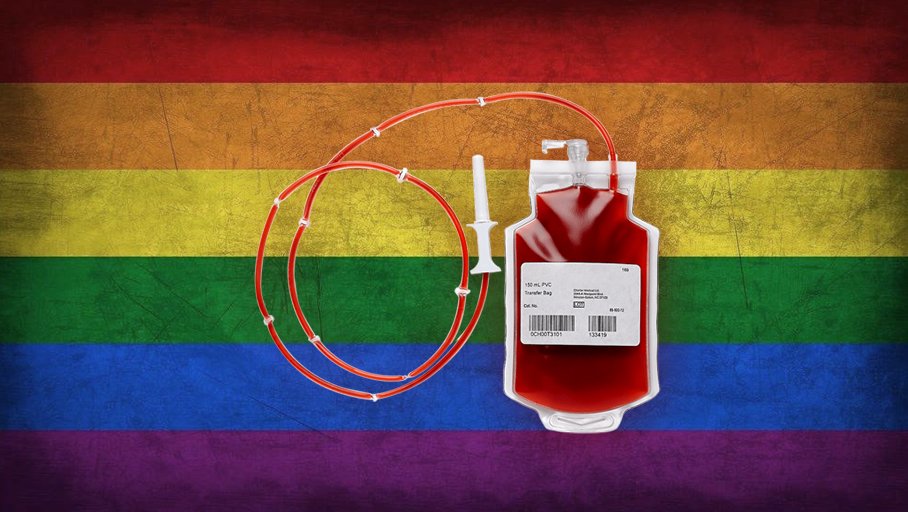
India’s blood donation policies have once again sparked a nationwide debate after the Central Government defended restrictions on certain groups donating blood, including transgender people, gay men, and sex workers. The matter is currently being reviewed by the Supreme Court of India, where petitioners have argued that the rule is discriminatory and outdated.
The government, however, has maintained that the restriction is based on public health concerns and recipient safety, not discrimination.
Let’s break down what the controversy is all about.
Why Is Blood Donation Restricted for Certain Groups?
India’s blood donation guidelines are issued by the National Blood Transfusion Council (NBTC) and the National AIDS Control Organisation (NACO).
Under the current guidelines, certain categories are labeled as “high-risk donors.” These include:
-
Men who have sex with men (MSM)
-
Transgender individuals
-
Sex workers
-
People with high-risk sexual behaviour
According to health authorities, individuals in these groups statistically have a higher probability of HIV or other blood-borne infections, which could pose risks during blood transfusion.
Because of this, they are permanently deferred from donating blood in India.
Why Is the Rule Being Challenged?
Petitioners have approached the Supreme Court arguing that banning entire communities from donating blood is discriminatory and violates fundamental rights under the Constitution.
Critics argue that:
-
Modern blood screening technology can detect infections effectively.
-
Policies should be based on individual risk behaviour, not sexual orientation or gender identity.
-
The rule stigmatizes the LGBTQ+ community.
Many activists also point out that several countries have already reformed their blood donation rules to make them more inclusive.
What the Government Told the Supreme Court
The Central Government defended the policy by saying the rules are based on scientific and medical data, not social bias.
According to the government:
-
Blood transfusion safety must remain the top priority.
-
India still faces a significant burden of HIV infections.
-
Any relaxation of donor eligibility must be evaluated carefully by experts.
Officials also emphasized that blood donation guidelines are designed to protect recipients, especially patients with weakened immune systems.
Global Perspective on Blood Donation Rules

Many countries historically had similar restrictions on LGBTQ+ blood donors.
However, policies have been changing globally:
-
United States replaced lifetime bans with shorter deferral periods.
-
United Kingdom now allows donations based on individual risk assessments.
-
Canada and Australia have also relaxed earlier restrictions.
Advocates in India believe the country should update its policies based on modern medical evidence.
Why This Debate Matters
India requires millions of blood units every year for surgeries, accidents, and medical treatments.
Critics argue that excluding entire groups reduces the potential donor pool, while supporters of the rule insist that safety must come before increasing supply.
The Supreme Court’s observations in this case could play a major role in shaping future blood donation policies in India.
What Happens Next?
The Supreme Court is currently hearing arguments from both sides. While the government has defended the policy as a public health safeguard, petitioners continue to challenge it as discriminatory and outdated.
The court’s eventual decision could determine whether India keeps its current restrictions or moves toward a more inclusive blood donation framework.
For now, the debate continues across legal, medical, and social circles.
Conclusion
The controversy surrounding LGBTQ+ people banned from donating blood in India has opened a larger discussion about public health, equality, and modern science.
While authorities prioritize recipient safety, critics believe policies should evolve with medical advancements and social progress.
As the Supreme Court examines the issue, the outcome could shape India’s healthcare policies and LGBTQ+ rights debate for years to come.
Follow us on instagram @desibooze , to get more updates of everything happening around you.