




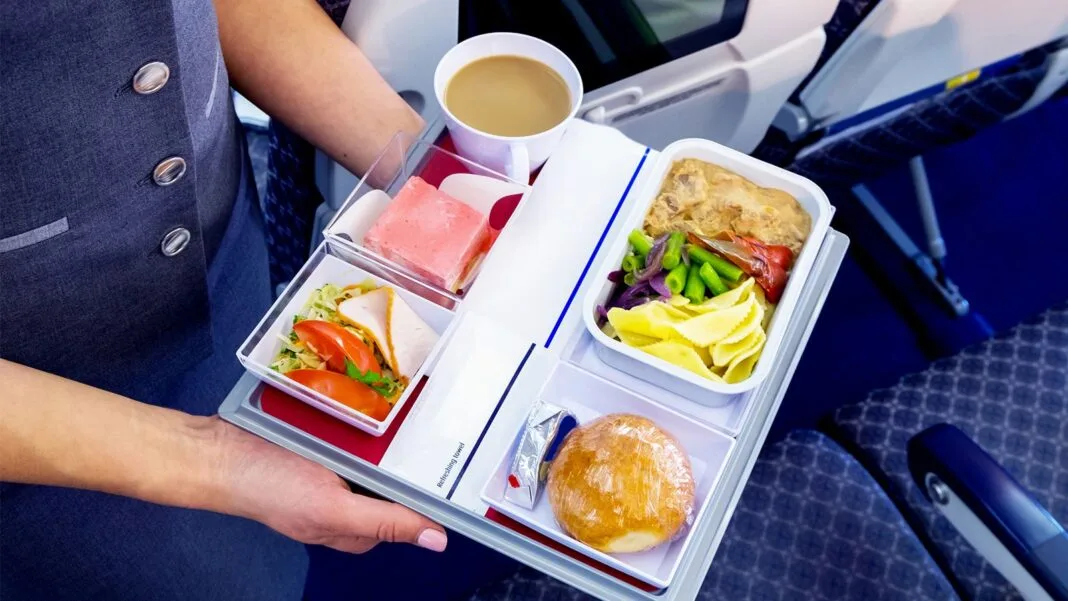
Have you ever noticed that airplane food tastes different compared to the same meal on the ground? Even dishes that usually taste delicious can feel slightly bland or less flavorful during a flight.
It’s not just your imagination. There is real science behind why airplane food tastes different when you are flying at 35,000 feet.
Several factors inside an aircraft cabin affect the way our taste buds work.
Your Taste Buds Change in the Air

One of the biggest reasons airplane food tastes different is reduced air pressure and low humidity inside the cabin.
At cruising altitude, the cabin environment becomes much drier than normal. Humidity levels can drop below 20%, which is far lower than typical indoor environments.
This dryness affects your sense of taste and smell, which are closely connected.
Studies have shown that passengers may experience up to 30% reduced ability to taste sweet and salty flavors during a flight.
That’s why some foods seem bland even though they are properly seasoned.
The Cabin Environment Affects Your Nose
A huge part of taste actually comes from smell. When your nose is dry or slightly congested due to cabin conditions, your ability to detect aromas decreases.
Without strong aromas, food naturally tastes less flavorful.
This is the same reason food tastes different when you have a cold.
Inside an airplane, the pressurized cabin environment slightly dulls your sensory perception, making flavors feel weaker.
Loud Cabin Noise Also Plays a Role

Another surprising factor is noise.
Aircraft cabins are filled with the constant hum of engines and airflow. Research suggests that loud background noise can affect how the brain perceives flavor.
Studies show that sweet flavors feel weaker in noisy environments, while savory or umami flavors remain more noticeable.
This is one reason airlines often include foods like:
-
Tomato-based dishes
-
Pasta with rich sauces
-
Mushrooms and cheese
These ingredients maintain flavor better at high altitude.
Airlines Actually Design Food Differently
Because of these conditions, airline chefs don’t cook meals the same way as restaurants.
Food prepared for flights usually contains stronger seasoning and richer sauces to compensate for reduced taste sensitivity.
Some airlines even work with professional chefs and scientists to create recipes that perform better in the air.
Interestingly, one drink that becomes more popular on flights is tomato juice. Its strong umami flavor remains enjoyable even when other tastes weaken.
The Psychology of Flying Also Matters
Your mental state can also affect taste.
Flying involves stress, excitement, or fatigue for many passengers. These emotions can influence how your brain processes flavors.
When you combine:
-
Dry cabin air
-
Lower air pressure
-
Constant engine noise
-
Travel fatigue
It creates a perfect situation where food simply doesn’t taste the same as it does on the ground.
So Is Airplane Food Really Bad?
Not necessarily.
Most of the time, the food itself isn’t the problem. The real reason lies in how the human body reacts to the flight environment.
Airlines actually put a lot of effort into designing meals that still taste good despite these challenges.
So the next time your airplane meal tastes a little different, remember — it’s not the chef’s fault.
It’s just science happening at 35,000 feet above the ground.
Follow us on instagram to get every update of the world – @desibooze