




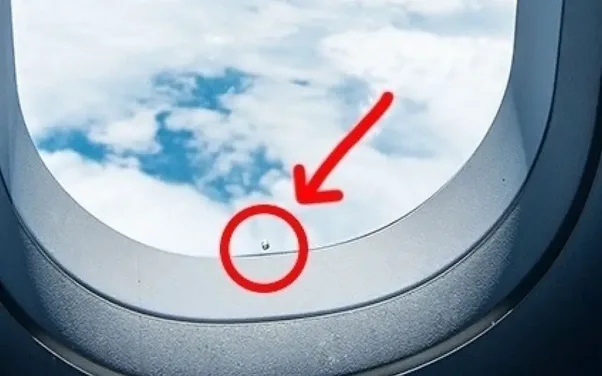
Have you ever sat by an airplane window and noticed a tiny hole at the bottom of the window? Most people either ignore it or assume it’s a small manufacturing detail. But that little hole actually plays a very important role in keeping passengers safe during a flight.
Yes, that tiny dot is not a mistake — it’s a carefully engineered safety feature.
Let’s break down the fascinating science behind it.
The Tiny Hole Is Called a “Bleed Hole”
The small hole you see in airplane windows is known as a bleed hole. It is designed to help regulate air pressure between the window layers.
Airplane windows are not made of just a single piece of glass or plastic. Instead, they are made of three layers:
-
Outer Pane – Faces the outside environment and handles most of the pressure difference.
-
Middle Pane – Adds an extra layer of safety backup.
-
Inner Pane – The layer passengers can touch inside the cabin.
The tiny hole is located in the middle pane.
Why Airplanes Need This Hole
When an aircraft flies at 35,000 feet, the air pressure outside is extremely low compared to the pressurized cabin.
Without pressure regulation, the window layers could experience dangerous stress differences.
The bleed hole helps by:
-
Equalizing pressure between the cabin and the middle window layer
-
Allowing the outer pane to handle most of the pressure load
-
Preventing structural damage to the window
This design ensures that the outer pane carries the pressure difference, which it is specifically built to withstand.
It Also Prevents Window Fogging
Another interesting function of the tiny hole is moisture control.
Cabin air contains humidity from passengers breathing and moving around. Without ventilation between layers, moisture could get trapped and cause window fogging.
The bleed hole allows a controlled airflow, preventing condensation between the panes and keeping the window clear.
So the next time you enjoy the clouds outside, remember that a tiny hole is helping you see them clearly.
What Happens If the Outer Window Breaks?

Here’s the reassuring part.
If the outer pane cracks or fails, the pressure automatically shifts and is managed by the middle pane.
Aircraft windows are designed with multiple redundancies, meaning there are backup layers to maintain safety.
This is why airplane windows are incredibly strong and rarely fail despite experiencing massive pressure differences during flight.
The Engineering Behind Airplane Safety
Modern aircraft undergo extremely strict safety testing. Windows are tested against:
-
High pressure differences
-
Extreme temperatures
-
Structural fatigue over thousands of flights
Engineers design every small detail — even a tiny hole — with safety in mind.
That small dot in the window is actually a brilliant piece of aviation engineering.
Next Time You Fly…
Look closely at the airplane window.
That tiny hole you see is silently working to keep the aircraft safe, balanced, and comfortable while flying thousands of feet above the ground.
Sometimes, the smallest features carry the biggest responsibilities.
Follow us on Instagram @desibooze